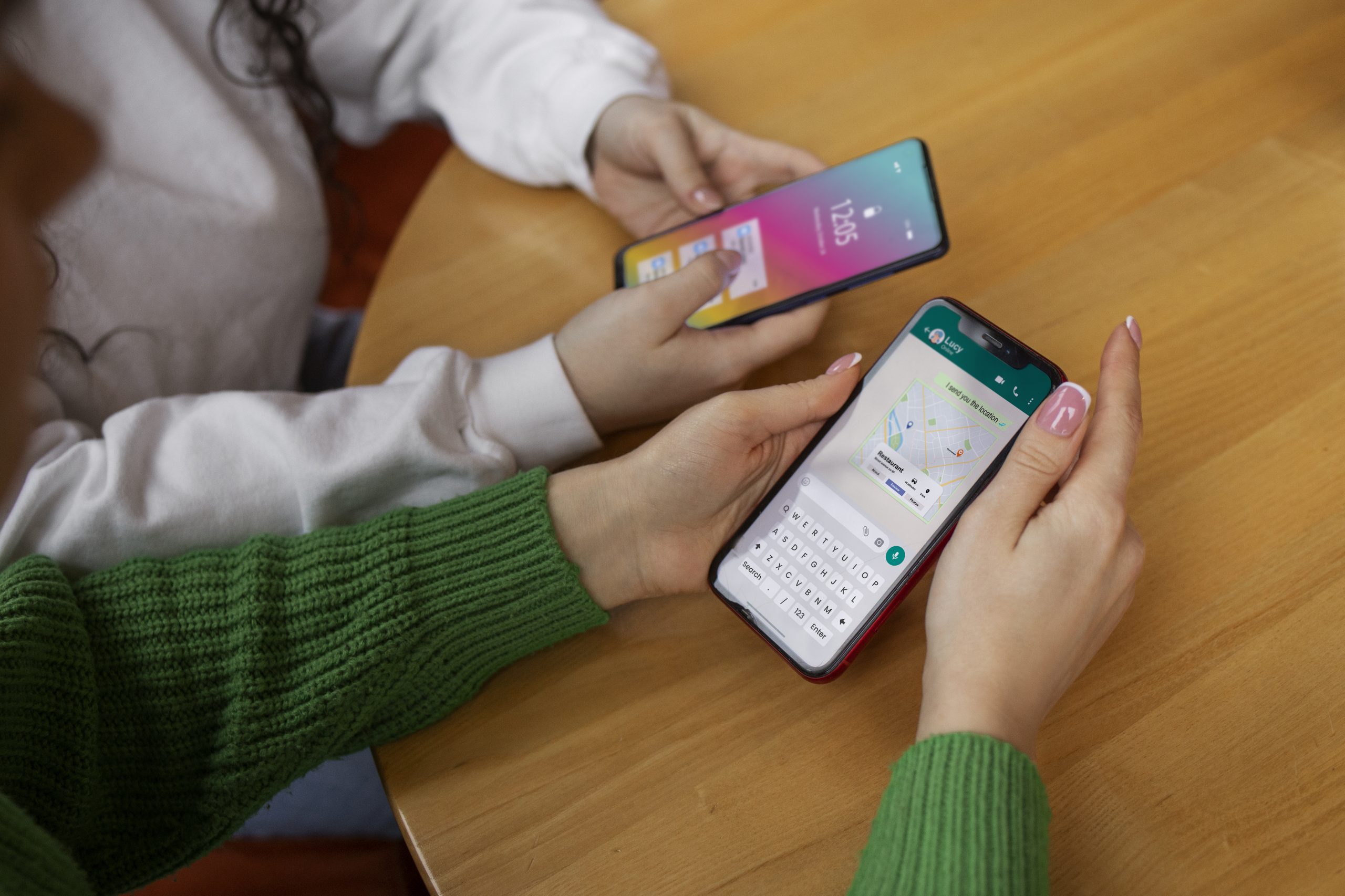
The 2 instant messaging applications we are going to explore play a crucial role in our daily lives, both personally and professionally. With an overwhelming number of applications available, it can be difficult to make an informed choice that meets your specific needs.
In this article, we present two of the best instant messaging applications, comparing them on key criteria such as security, ease of use, and the features they offer. Whether you are looking for an application to quickly communicate with loved ones or to secure your professional communications, this comparison will help you make the right choice.
Here are some of the reasons why messaging applications have become so popular:
- Real-time communication: No more waiting — messages are instant.
- Multimedia sharing: Send photos, videos, and even documents in the blink of an eye.
- Video and audio calls: Stay close to your contacts wherever you are.
According to a recent study, “more than 41 million messages” are sent every minute around the world, which demonstrates the growing importance of messaging applications in our daily lives. But which one should you choose? Let’s discover two of the leading applications together.
Why Choose an Instant Messaging Application?
Instant messaging applications have become an essential tool in our daily lives, both personally and professionally. Their popularity is explained by the speed and simplicity they bring to exchanges, while offering varied features that go well beyond simple text conversation.
Advantages of Instant Messaging
-
Fast, real-time communication: Messaging applications allow instant conversations, offering a fluidity and immediacy that email or other communication channels cannot match. They facilitate real-time coordination, whether for personal or professional conversations.
-
Multimedia file sharing: Most messaging applications support the sharing of documents, images, videos, and other file types. This makes collaboration easier by sending files directly through the application without going through third-party services.
-
Integrated audio/video calls: In addition to written messages, these applications often include voice and video call features, allowing you to stay in visual or audio contact with loved ones or colleagues, regardless of where you are.
Criteria for Choosing an Application
When choosing a messaging application, several factors should be considered to ensure it meets your needs.
-
Security and privacy: With the growing importance of personal data, security is a paramount criterion. Make sure the application offers end-to-end encryption to guarantee the confidentiality of your exchanges. For example, applications like Signal are praised for their high level of security, recommended by cybersecurity experts.
-
Operating system compatibility: Verify that the application is compatible with your devices’ operating systems (Android, iOS, Windows, etc.). Some applications, like WhatsApp, are available on all major platforms, while others may be more limited in terms of compatibility.
-
Ease of use and integration with other tools: The application should be easy to use and offer an intuitive interface. Additionally, some messaging apps, like Google Chat, offer integrations with other tools (such as Google Drive or Calendar), thus facilitating collaboration within teams.
By considering these criteria, you will be able to choose an instant messaging application that matches your specific needs, whether for personal or professional exchanges.
Application 1: WhatsApp
WhatsApp is undeniably one of the most popular instant messaging applications in the world. With over 2 billion active users, it has established itself as an essential tool for fast and secure exchanges, both in personal and professional life.
Overview of WhatsApp
Launched in 2009, WhatsApp quickly won over millions of users thanks to its ease of use and numerous features. Acquired by Facebook (now Meta) in 2014, the application has continued to evolve to offer a complete and intuitive user experience.
Today, WhatsApp is available on iOS, Android, and even as a web version, allowing seamless synchronization between devices. What sets it apart from its competitors is its end-to-end encryption, guaranteeing the confidentiality of exchanges.
Key Features
WhatsApp stands out with a rich array of features:
- Text, audio, and video messages: Users can exchange written messages, voice notes, or real-time videos.
- Audio and video calls: WhatsApp allows free voice and video calls via an internet connection, whether one-on-one or in groups.
- Multimedia file sharing: Photos, videos, documents, and even real-time location can be shared through the application.
- Group chats: Create groups with up to 1,024 participants for themed discussions or event planning.
- WhatsApp Business: A version dedicated to businesses allows automating certain tasks and interacting more efficiently with customers.
Advantages and Disadvantages
Advantages:
- Wide accessibility: Available on all major operating systems and platforms.
- End-to-end encryption: Robust security that guarantees the confidentiality of messages and calls.
- Intuitive use: A simple and clean interface, easy to get started with.
Disadvantages:
- Phone number dependency: Each account is linked to a number, limiting simultaneous multi-device use.
- Limited customization options: Unlike other applications, WhatsApp does not offer many options to customize the user experience.
In summary, WhatsApp remains an essential reference in the field of instant messaging, whether for casual or professional exchanges. However, its dependency on a phone number may be a limitation for some users.
Application 2: Signal
Signal is an instant messaging application focused on security and privacy, recommended by many cybersecurity experts. It is often cited as one of the most secure alternatives to WhatsApp, particularly for users concerned about protecting their personal data and communications.
Overview of Signal
Launched in 2014 by the nonprofit organization Signal Foundation, the application stands out for its end-to-end encryption, but also for its transparency policy. Unlike other messaging services, Signal does not collect any user data for advertising or commercial purposes. All conversations, whether text or voice, are fully encrypted, ensuring maximum security.
Key Features
Signal offers a series of features while strictly respecting user privacy:
- Encrypted text, audio, and video messages: Conversations are secured end-to-end, ensuring that only the sender and recipient can read the messages.
- Secure audio and video calls: In addition to messages, Signal allows voice and video calls, also protected by strong encryption.
- File sharing: Send documents, photos, and videos without compromising the confidentiality of exchanges.
- Disappearing messages: Signal allows configuring messages that disappear after a set duration, providing additional control over the lifespan of shared information.
- Open-source: Signal’s code is public, allowing independent developers to verify its security and make improvements.
Advantages and Disadvantages
Advantages:
- Maximum security: End-to-end encryption for all messages and calls, and no collection of personal data.
- Open-source: Being an open-source application, Signal offers total transparency in terms of security.
- Privacy respect: The application retains no metadata and does not require connection to other third-party services.
Disadvantages:
- Fewer customization options: Compared to WhatsApp, Signal offers fewer fun features like stickers or interface customization options.
- Smaller user base: Signal has not yet reached WhatsApp’s popularity, which may limit its use if your contacts are not on it.
In conclusion, Signal is the application of choice for those seeking a simple yet ultra-secure messaging solution. Its transparency and commitment to privacy make it an indispensable tool for users concerned about protecting their communications.
Comparison of the Two Applications
Although WhatsApp and Signal are both instant messaging applications, they address different needs in terms of communication and security. Here is a detailed comparison of their main features to help you better understand their respective advantages.
Security and Privacy
- WhatsApp offers end-to-end encryption for all messages and calls, but as a subsidiary of Meta, certain data such as metadata (message send time, recipient, etc.) is collected and shared with the parent company for commercial purposes.
- Signal, on the other hand, stands out with enhanced security. The application does not collect any user data and does not retain metadata. Everything is encrypted end-to-end, and the platform is open-source, allowing security audits by independent developers.
Features
- WhatsApp stands out for its versatility and numerous features, such as group chats, ephemeral statuses, and group video calls. The application is widely used, making it easy to communicate with a large number of contacts. It also offers WhatsApp Business for companies.
- Signal focuses on privacy-oriented features, such as disappearing messages and the ability to use the application without sharing personal data. However, it offers fewer customization and social interaction options than WhatsApp.
Target Audience
- WhatsApp is ideal for daily use, whether personal or professional. It is perfectly suited for users looking for a simple, accessible application rich in interactive features.
- Signal, on the other hand, is more suited to users concerned about their privacy, as well as professionals or activists who need ultra-secure messaging where data collection is non-existent.
Usage and Popularity
- WhatsApp has over 2 billion active users worldwide, making it one of the most popular messaging applications. Its widespread adoption makes it an essential tool for fast, global communication.
- Signal, with a smaller user base, is particularly popular among security experts and tech-savvy users. Its popularity has, however, surged following recent controversies about WhatsApp’s data privacy.
Conclusion
In summary, WhatsApp and Signal are two high-performing instant messaging applications, but each addresses different needs.
- WhatsApp is the ideal option for those looking for a versatile, accessible application rich in features. It is particularly suited for daily use, both for personal and professional conversations, thanks to its simple interface and widespread global adoption.
- Signal, on the other hand, positions itself as the preferred choice for users concerned about their privacy. Its end-to-end encryption technology, absence of metadata collection, and open-source transparency make it an essential reference for those seeking ultra-secure messaging.
Depending on your priorities — accessibility and features versus security and privacy — one of these applications will meet your expectations. Whatever your choice, it is clear that instant messaging applications will continue to play a central role in how we communicate daily.
Want to optimize communication within your business or in your professional exchanges? Discover how Utelys can help you integrate the best instant messaging solutions, tailored to your specific needs.